
St. George Street
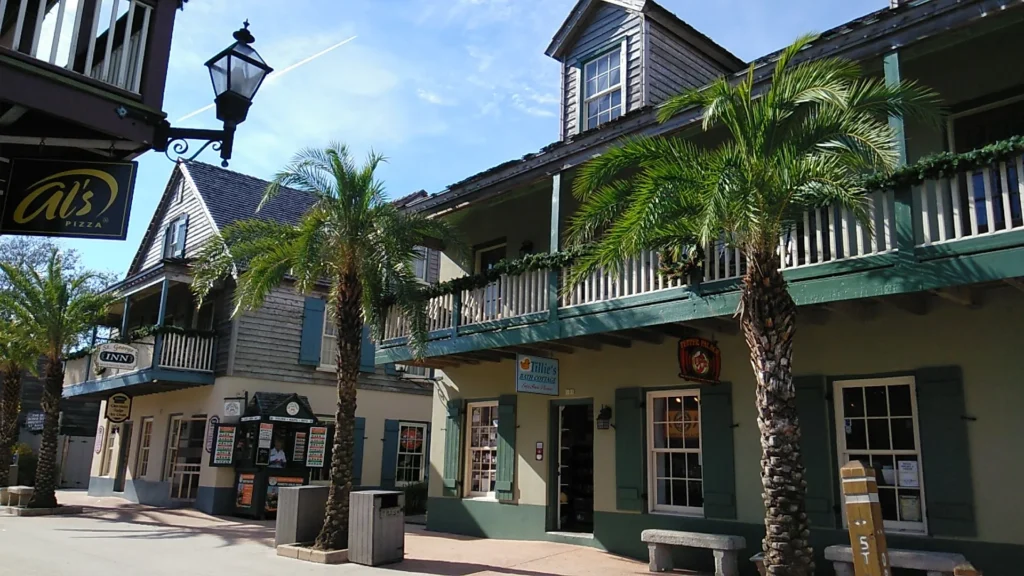
Discover the beating heart of America’s oldest city along St. George Street, a vibrant pedestrian-only thoroughfare that serves as the centerpiece of St. Augustine’s Historic Downtown District. This enchanting brick-paved street stretches from the iconic Old City Gates at the north end through several blocks of perfectly preserved and faithfully reconstructed colonial-era buildings, creating an immersive historical environment where past and present blend seamlessly. Following a colonial roadbed first laid out in the 1700s, St. George Street has served as St. Augustine’s main commercial and social corridor for more than 250 years, evolving from Spanish “calle real” (royal street) to British thoroughfare to American downtown while maintaining its essential character as the city’s gathering place and commercial center.
The street’s remarkable preservation and careful restoration make it a living museum of architectural history. Many buildings are original 18th and early 19th-century structures, while others represent faithful reconstructions built on historic foundations using period-appropriate materials and techniques. This commitment to historical accuracy creates an authentic atmosphere where visitors genuinely feel transported to colonial times, despite modern shops and restaurants operating within historic walls. The Spanish Colonial, British colonial, and early American architectural styles represented along St. George Street illustrate the diverse cultural influences that shaped St. Augustine over centuries of changing governance and evolving populations.
Walking St. George Street north to south provides a journey through layers of history. The Old City Gates at the northern entrance, built in 1808 from coquina stone, mark what was once the only entrance through the city’s defensive walls into the protected settlement. These iconic pillars have become one of St. Augustine’s most photographed landmarks, providing a dramatic gateway to the historic district. Just beyond the gates, the Oldest Wooden School House offers glimpses into colonial education, while the Colonial Quarter’s two-acre living history attraction immerses visitors in centuries of daily life through demonstrations, period buildings, and interactive experiences.
St. George Street’s pedestrian-only designation creates a safe, leisurely environment perfect for strolling, shopping, dining, and people-watching. The absence of vehicle traffic allows visitors to wander freely, stopping to examine architectural details, browse shop windows, watch street performers, and soak in the historic atmosphere without dodging cars or worrying about traffic. This walkability makes the street exceptionally family-friendly, as children can safely explore while parents relax at outdoor cafes or browse boutiques. The gentle pace encourages lingering rather than rushing, transforming a simple shopping trip into a genuine experience of historic tourism.
The shopping and dining options along St. George Street balance historical authenticity with contemporary appeal. Locally owned boutiques offer unique merchandise impossible to find in chain stores or shopping malls. Art galleries showcase works by regional artists inspired by Florida’s coastal beauty and Spanish heritage. Specialty shops sell handmade leather goods, regional artisan crafts, locally published books about St. Augustine history, gourmet food products, and distinctive gifts that capture the city’s character. These independent retailers give St. George Street personality and charm lacking in generic tourist districts dominated by national chains.
Dining options range from casual cafes and ice cream parlors to upscale restaurants serving fresh seafood and regional cuisine. Historic courtyards and shaded patios provide atmospheric settings where visitors can enjoy meals while surrounded by centuries-old architecture and lush tropical plantings. The street’s numerous candy shops, chocolate boutiques, and old-fashioned soda fountains appeal particularly to children and those with sweet teeth, offering treats made using traditional methods and family recipes passed through generations.
Street performers and musicians add entertainment throughout the day, creating spontaneous moments of joy as guitarists strum Spanish melodies, artists sketch quick portraits, and costumed characters pose for photographs. These performers contribute to St. George Street’s lively, festival-like atmosphere while honoring the street’s historical role as St. Augustine’s social and cultural center. Many performers are exceptionally talented, having honed skills performing before appreciative audiences day after day.
Historic landmarks punctuate the commercial spaces, reminding visitors they’re walking through genuine history rather than theme park reproductions. The Pena-Peck House, a Spanish Colonial residence dating to 1750, offers guided tours showing how colonial elite lived. The St. Photios Greek Orthodox National Shrine honors Greek colonists who sought refuge in St. Augustine in the 1770s with stunning Byzantine frescoes highlighted in 22-karat gold leaf. These unexpected discoveries reward curious explorers willing to venture beyond obvious tourist attractions.
St. George Street’s charm extends beyond daylight hours. Evening brings different energy as restaurants fill with diners, bars welcome patrons seeking craft cocktails and local beers, and the street’s period lighting creates romantic ambiance perfect for sunset strolls. During annual events like Nights of Lights, when millions of white lights transform downtown into a glittering wonderland, St. George Street becomes absolutely magical.
Good to know
- • Pedestrian-only historic street (no vehicle traffic)
- • Follows colonial-era roadbed from 1700s
- • Heart of St. Augustine's Historic Downtown
- • Many original 18th-century buildings preserved
- • Faithful reconstructions on historic foundations
- • Spanish Colonial and British architecture
- • Safe, walkable environment perfect for families
- • Old City Gates at north entrance (built 1808)
- • Oldest Wooden School House nearby
- • Colonial Quarter living history attraction
- • Locally owned boutiques and shops
- • Art galleries featuring regional artists
- • Handmade leather goods and artisan crafts
- • Specialty food shops and gourmet products
- • Unique gift shops with one-of-a-kind items
- • Restaurants ranging from casual to upscale
- • Historic courtyards and shaded patios
- • Fresh seafood and regional cuisine
- • Candy shops and chocolate boutiques
- • Old-fashioned soda fountains
- • Street performers and live musicians
- • Costumed historical characters
- • Pena-Peck House historic home tours
- • St. Photios Greek Orthodox Shrine
- • Medieval Torture Museum
- • Multiple coffee shops and cafes
- • Ice cream parlors and gelato shops
- • Free to walk and explore (no admission fee)
- • Open daily year-round
- • Individual shop hours vary (typically 9 AM-6 PM or later)
- • Evening dining and entertainment available
- • Magical during Nights of Lights season
- • Wheelchair accessible (brick pavement)
- • Pet-friendly (check individual business policies)
- • Public restrooms at Visitor Information Center
- • Nearby public parking garages
- • Old Town Trolley stops on street