
St. Augustine Lighthouse and Maritime Museum
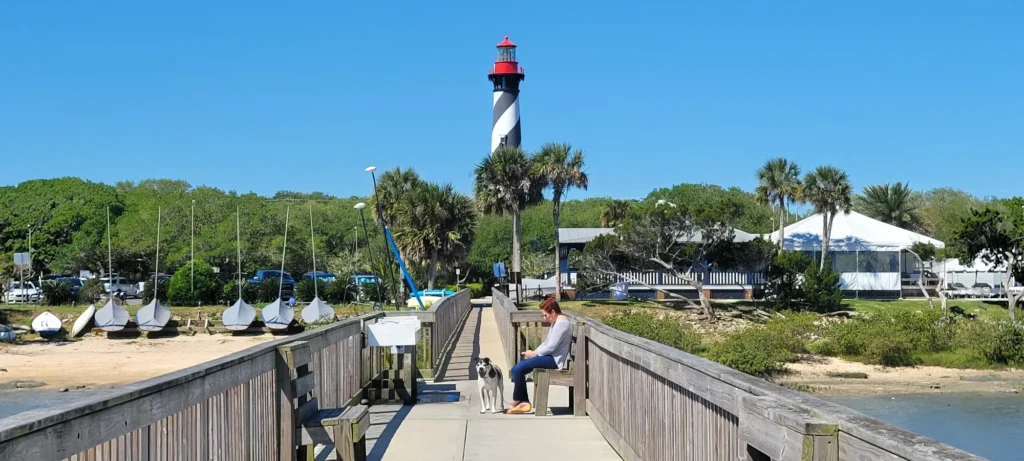
Rise above St. Augustine’s coastline at the iconic St. Augustine Lighthouse and Maritime Museum, a spectacular 165-foot tower that has guided mariners safely home for more than 150 years while serving as one of Florida’s most recognizable landmarks. Standing majestically on Anastasia Island overlooking both Matanzas Bay and the Atlantic Ocean, this striking black and white spiral tower beckons visitors to climb its 219 steps for breathtaking panoramic views that stretch from historic downtown St. Augustine across pristine beaches to the horizon where sea meets sky. As a fully accredited museum and Smithsonian Affiliate, this remarkable institution combines an active aid to navigation with comprehensive exhibits, archaeological programs, and educational experiences that illuminate more than 500 years of maritime history at America’s oldest port.
The lighthouse’s history begins centuries before the current tower’s construction. Spanish explorers established a wooden watchtower in the late 1500s, using flame signals to warn of approaching enemies and guide Spanish vessels to the settlement. Sir Francis Drake destroyed this original structure during his 1586 attack on St. Augustine, but colonists quickly rebuilt with a coquina stone tower in 1683 that served for nearly 200 years. By the mid-1800s, erosion threatened this aging lighthouse, which stood dangerously close to the receding shoreline. In 1874, after the old tower toppled into the sea, the current lighthouse opened further inland, its first-order Fresnel lens casting powerful beams visible for 19 nautical miles, ensuring its beam would guide ships safely for generations to come.
Today’s visitors experience far more than a historic tower. The lighthouse grounds encompass multiple buildings, exhibits, and attractions spread across beautifully landscaped property. The Keepers’ House Museum, meticulously restored to its 1890s appearance, offers fascinating insights into the daily lives of lighthouse keepers and their families who maintained the vital beacon. Exhibitions showcase period furnishings, photographs, keeper journals, and personal items that humanize these dedicated individuals who lived isolated lives ensuring maritime safety. Children particularly enjoy seeing the cramped quarters where keeper families raised children, prepared meals, and carried out the constant duties required to maintain the light.
The Maritime Archaeology and Education Center houses artifacts recovered from numerous shipwrecks discovered in waters surrounding St. Augustine. The centerpiece exhibit focuses on a 1782 British ship carrying refugees escaping newly independent America, providing tangible connections to Revolutionary War history. Visitors can view cannons, navigation instruments, personal possessions, and other items that lay submerged for more than two centuries before archaeologists carefully recovered and preserved them. Interactive displays explain how maritime archaeologists use cutting-edge technology to locate, document, and excavate underwater sites, making abstract scientific concepts accessible and engaging.
The lighthouse climb remains the attraction’s main draw, offering rewards well worth the effort for those able to make the ascent. The 219 spiraling steps, equivalent to climbing a 14-story building, wind upward through the tower’s interior, with periodic landings providing rest breaks and historical information. Visitors must be at least 44 inches tall for safety reasons, though younger children can explore the grounds, museums, and other attractions. Upon reaching the observation deck, climbers discover why generations have made this pilgrimage: 360-degree views encompassing historic downtown, the Bridge of Lions, Castillo de San Marcos, miles of pristine Atlantic beaches, Intracoastal Waterway marshes, and endless ocean horizons create photography opportunities and memories that last lifetimes.
The museum operates an active traditional wooden boat building program where skilled craftspeople construct historically accurate reproductions of vessels once common in local waters. Visitors can watch artisans using hand tools and centuries-old techniques to shape hulls, fashion oars, and rig sails, preserving maritime folk arts that would otherwise disappear. These completed boats actually sail local waterways, connecting past to present through living tradition rather than static display.
Nature trails wind through maritime hammock habitat, offering peaceful walks where visitors spot native birds, butterflies, and plants adapted to coastal environments. The children’s play area features a pirate ship playground perfect for younger visitors who can’t climb the tower. The Tin Pickle cafe serves homemade drinks, snacks, and light meals, while the gift shop offers nautical-themed souvenirs, books, jewelry, and locally made items.
The lighthouse’s reputation as one of America’s most haunted locations adds paranormal intrigue to historical significance. The Dark of the Moon Ghost Tour, offered after sunset, explores the lighthouse and grounds with investigators sharing documented encounters and unexplained phenomena. Serious ghost hunters can book extended evening investigations bringing their own equipment to explore spaces most visitors never access.
As a nonprofit organization, every admission ticket, membership, gift shop purchase, and donation directly supports the museum’s mission to discover, preserve, present, and keep alive maritime heritage stories. This sustainable funding model ensures future generations can continue learning from this remarkable landmark where history, education, and coastal beauty converge.
Good to know
- • 165-foot historic lighthouse tower built 1874
- • Climb 219 steps to observation deck
- • 360-degree panoramic views from top
- • Active aid to navigation still guiding ships
- • Black and white spiral tower (iconic landmark)
- • National Register of Historic Places
- • American Alliance of Museums accredited
- • Smithsonian Affiliate institution
- • Tripadvisor Travelers' Choice winner
- • Restored 1890s Keepers' House Museum
- • Maritime Archaeology and Education Center
- • 1782 British shipwreck exhibits
- • Traditional wooden boat building program
- • Watch craftspeople build historic vessels
- • Maritime hammock nature trails
- • Pirate ship playground for children
- • Tin Pickle cafe on-site
- • Extensive gift shop with nautical items
- • Dark of the Moon Ghost Tour (after hours)
- • Extended paranormal investigations available
- • Free guided tours hourly 11 AM-3 PM
- • 44-inch height minimum for tower climb
- • Pet-friendly grounds (leashed dogs welcome)
- • Wedding venue with lighthouse backdrop
- • Educational programs and school groups
- • Open 363 days per year
- • Closed only Thanksgiving and Christmas
- • Free parking available
- • Nonprofit museum supporting maritime heritage