
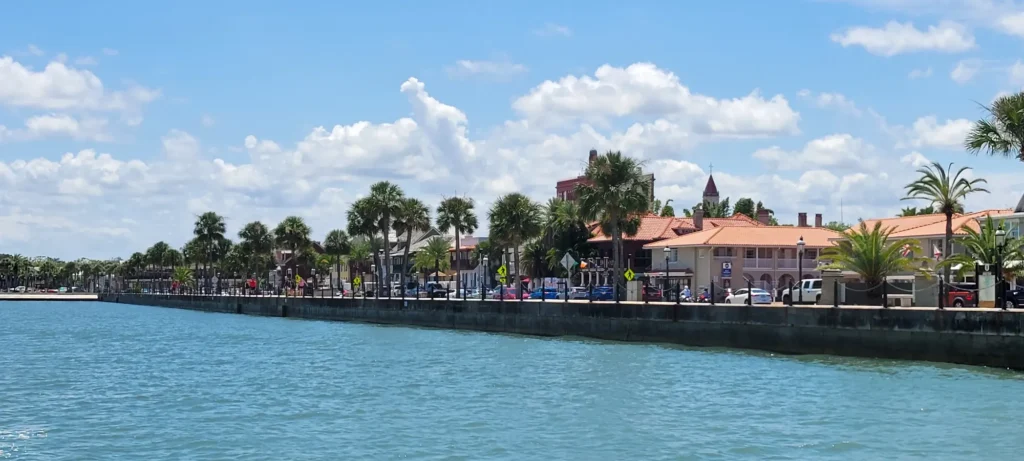
Moving to St. Augustine
Moving to St. Augustine
The honest guide for people who keep thinking about it.
Moving to St. Augustine: The Honest Guide
Not the glossy "move to paradise" version. Just what we would want someone to understand before they start browsing homes at midnight.
There is a specific moment when St. Augustine stops being a place you visited and starts becoming a place you imagine living. Maybe it happens while you are walking through the old streets after dinner. Maybe it happens on A1A when the ocean keeps appearing between houses. Maybe it happens during a winter afternoon when you realize it is 67 degrees and you are not scraping ice off anything.
That is usually when the thought shows up: Could we live here?
We get it. St. Augustine has that effect on people. It is historic, coastal, weird, beautiful, relaxed, inconvenient, expensive in spots, still surprisingly small in others, and not quite like anywhere else in Florida. It is not Miami. It is not Orlando. It is not Jacksonville. It is not a sleepy beach town either, at least not anymore. It is a working, growing, occasionally overcrowded, deeply charming old city with beach communities wrapped around it and a fast-growing county behind it.
The St. Augustine Lifestyle
St. Augustine is slow, but not sleepy. That is the first thing to understand. Life here has a slower rhythm than most major cities. People are not usually in a hurry unless they are stuck in traffic on US 1, trying to get across the Bridge of Lions, or late for a dinner reservation downtown during Nights of Lights.
The lifestyle depends heavily on where you live. If you live downtown, St. Augustine can feel like a walkable historic village with tourists passing through your neighborhood every day. If you live on Anastasia Island, it feels more like a beach-town version, with the lighthouse, the state park, the Alligator Farm, and the Bridge of Lions all shaping your daily geography. If you live in St. Augustine Beach or Crescent Beach, the ocean becomes part of your routine. If you live west of town, your life may feel more suburban than historic.
That is one of the reasons people get confused when they talk about "moving to St. Augustine." They may be picturing brick streets and balconies, but the house they can afford may be 20 minutes west in a subdivision. That is not necessarily bad. It just means you need to know which St. Augustine you are moving to.
The Weather: Beautiful, Humid, and Not Always Gentle
The good part is obvious. Winters are mild. Spring can be spectacular. Fall can be gorgeous once the worst heat breaks. You can be outside most of the year. Average temperatures typically range from the upper 40s in winter to around 90 in summer – though the humidity makes summer feel heavier than the number on the forecast.
The hard part is summer. Summer in St. Augustine is hot, humid, buggy, stormy, and relentless. Yard work happens early. Dog walks happen early or late. You learn where shade is. You learn that afternoon thunderstorms are not a surprise – they are part of the schedule.
Then there is hurricane season. Anyone moving here should treat hurricane risk as real. You need to think about flood zones, evacuation routes, insurance, roof age, drainage, tree limbs, and generators. The historic core, the island neighborhoods, and waterfront properties all require a serious look at flooding. Coastal charm and water risk often travel together.
Cost of Living: The Dream Is Not Cheap Anymore
Housing is the biggest issue. As of spring 2026, the typical St. Augustine home value is around the low $430,000s. That number also does not tell the whole story – historic homes, beachside homes, newer construction, condos, planned communities, and inland properties all behave differently.
Property taxes are another piece of the puzzle. Florida has homestead protections for primary residents, but new buyers should estimate taxes based on the purchase price, not what the previous owner paid. Utilities vary depending on where you live and which provider serves you. Ask for actual recent utility bills before buying or renting.
Insurance is the other big one. A home that looks affordable online can become much less affordable when the full monthly number – homeowners, flood, wind – appears. This is not a footnote. It is a budget line.
Neighborhoods: Where to Live Depends on the Life You Want
Historic Downtown
The dream people usually picture first. Old buildings, brick streets, restaurants, galleries, churches, courtyards, and the feeling that you live inside the story everyone else is visiting. It can be wonderful. It can also be noisy, expensive, tourist-heavy, parking-challenged, and complicated for renovations.
Best for: People who value walkability, architecture, restaurants, and atmosphere more than garage space or quiet streets.
Wrong for: Anyone who hates tourists, needs easy parking, or does not want old-house maintenance.
Anastasia Island
One of the most balanced places to live if you want St. Augustine without being fully downtown. Beach side of the city, the lighthouse, Anastasia State Park, the Amphitheatre, local restaurants, Davis Shores, and quick access back over the Bridge of Lions. It feels more lived-in than vacation-only, though parts are heavily influenced by tourism and rentals.
Best for: People who want beach access, island life, and proximity to downtown.
Wrong for: People who want bargain pricing or never want to deal with bridge traffic.
St. Augustine Beach
The closest thing the area has to a classic beach town. The pier, beach access, A1A, restaurants, bars, beach events, surf shops, and residential neighborhoods all give it a different feel from downtown. More casual than Ponte Vedra, busier than Crescent, and more beach-focused than Anastasia as a whole.
Best for: Beach people, walkers, surfers, retirees, remote workers, and families who want a coastal routine.
Wrong for: People who need quiet during peak visitor seasons or want a low-cost coastal buy.
Vilano Beach
North of downtown across the Vilano Bridge. Quieter, more residential, a little more tucked away. You still get beach access, water views in places, restaurants, and easy access to A1A North and the GTM Reserve. Vilano can feel less polished than some beach communities, which is part of its appeal.
Best for: People who want quieter beach living near town.
Wrong for: People who want lots of shopping, nightlife, or dense walkability.
Lincolnville
One of St. Augustine's most historically important neighborhoods. Deep Black history, a strong sense of place, and a location just south of the downtown core. For the right buyer, Lincolnville offers walkability, character, historic homes, and proximity to downtown without being directly in the busiest tourist lanes. Buyers should approach the neighborhood with respect for its history.
Best for: People who value history, walkability, neighborhood character, and being close to downtown.
Crescent Beach
South of St. Augustine Beach, more relaxed, residential, and spread out. The beach is wide and often less crowded. Matanzas Inlet is nearby. This is a strong choice for people who want more beach and less downtown. You will drive more for errands and services.
Best for: Beach-focused buyers, vacation-rental investors, and retirees who want distance from the busiest areas.
A high-end planned community north of town, closer to Jacksonville. Golf-course, amenity, HOA, family, and commuter territory. It does not feel like historic St. Augustine – it feels like an upscale Northeast Florida master-planned community with St. Augustine access.
Best for: Families, professionals, Jacksonville commuters, and people who want newer construction and amenities.
Wrong for: People who want old-city charm outside their front door.
Schools: One of the Big Reasons Families Look Here
St. Johns County schools are a major relocation driver. The district has long had a strong reputation within Florida, and recent rankings place it near the top of the state. That reputation affects housing demand – families move here for schools, and neighborhoods zoned for popular schools can command higher prices. But do not assume a house will always feed into the school you expect. Verify current zoning and future rezoning possibilities directly with the district before making a decision.
The Job Market: Bring Your Job If You Can
St. Augustine is not a major job center in the way Jacksonville is. The local economy has hospitality, tourism, education, healthcare, construction, real estate, retail, service work, government, and small business activity. But if you are expecting a deep corporate job market right in town, you may be disappointed. Remote work has changed the area significantly and has become a much larger share of the local workforce.
Our practical advice: if you already have a remote job, retirement income, investment income, a portable business, or Jacksonville employment lined up, St. Augustine becomes much easier. If you need to move here and then find a high-paying local job quickly, be careful.
Commuting to Jacksonville
A lot of people live in St. Augustine or northern St. Johns County and commute to Jacksonville. Some do it happily. Some do it because they underestimated it. The commute depends heavily on where you live and where in Jacksonville you work. I-95 is the main route, but accidents, school traffic, weather, and peak-hour congestion can turn a normal drive into a long one. Rush-hour travel from St. Augustine to downtown Jacksonville has been estimated at around an hour or more.
Do the drive at your actual commute time before buying. Not once. Several times. A house that feels perfect on Saturday may feel different after six months of dark morning drives and I-95 brake lights.
Daily Life: Groceries, Shopping, Services
Daily life in St. Augustine is easier than it used to be, but still not as convenient as a large metro. You have Publix, Winn-Dixie, Aldi, Walmart, Target, local markets, hardware stores, pharmacies, gyms, and most normal daily needs. For bigger shopping, many residents go to Jacksonville. For certain specialty stores, major medical appointments, airport travel, and broader job options, Jacksonville is the pressure valve.
Restaurants are a plus – St. Augustine punches above its weight for food because tourism supports more dining than a normal city this size would have. But grocery shopping, contractors, and services can be affected by growth. Good contractors get busy. Appointment windows stretch. During peak seasons, traffic makes simple errands less simple.
What You'll Love
You may love the mornings most. The city is at its best early. Before the crowds thicken. Before the heat builds. A quiet walk downtown, a beach sunrise, coffee on the island, a drive down A1A, a Saturday farmers market, a mild January afternoon – these are the things that make people feel lucky to live here.
You may love the access to water. The ocean, the Intracoastal, Matanzas Bay, Salt Run, the inlet, the marshes. Even if you are not a boater, water shapes the area. You may love that history is not hidden away in one museum district – it is just there. In the street grid, the fort, Lincolnville, the churches, the old hotels, the cemeteries. And yes, you may love winter here. Many people do.
What You Might Find Frustrating
You may hate the traffic more than you expect. Not big-city traffic exactly, but small-city infrastructure under heavy visitor and growth pressure. Bridges, beach roads, US 1, State Road 16, downtown parking, school zones, and seasonal surges can make short distances feel longer than they look on a map.
You may find housing frustrating – prices high for what you get, older homes needing work, beach properties with insurance concerns, condos with fees. You may find summer oppressive. You may find the job market limiting. And you may find that the version of St. Augustine you loved on vacation is not the same as the version you live every Tuesday. That is true everywhere, but it is especially true in places built around visitor magic.
Before You Move: Visit in August. Visit during Nights of Lights. Visit on a rainy weekday. Visit when traffic is annoying. Visit when you have to run normal errands. That is how you learn whether you love the real place or just the vacation version.
Who St. Augustine Is Right For
St. Augustine is a strong fit for people who want coastal life with history, not just beach life. It works for remote workers, retirees, semi-retired people, families prioritizing St. Johns County schools, Jacksonville commuters who can tolerate the drive, people with flexible schedules, and buyers who understand Florida ownership costs.
It is good for people who like being outside, who appreciate old places, who can handle tourists, and who do not need a major city's nightlife, job density, or shopping variety every day. It is also good for people who want a slightly slower life without disappearing completely – Jacksonville is close, Daytona is not far, Orlando is reachable.
It may be wrong for people who want cheap coastal living, who hate humidity, dislike tourists, need a fast-paced urban environment, require a specialized job market, or want everything new, easy, wide, and convenient. And it may be wrong for buyers who stretch too far financially because they fall in love with the idea of living here.
Connect With Our St. Augustine Relocation Expert
Thinking about moving here is fun. Getting serious about it should be clearer than scrolling listings at midnight and guessing what each neighborhood feels like. If you are considering a move to St. Augustine, we can help point you toward local guidance, neighborhood context, and the right next conversations.
Whether you are looking for historic charm, beach access, a family-friendly school zone, a quieter residential community, or a second-home path that may eventually become full-time, the smartest move is to talk with someone who understands the area beyond the listing photos.
More St. Augustine resources:
- Real Estate Buyer's Guide
- Explore St. Augustine Neighborhoods
- Historic Downtown
- Anastasia Island
- St. Augustine Beach
- Vilano Beach
- Uptown / Lincolnville
- Ponte Vedra Beach
- Best Day Trips
- All St. Augustine Guides